I recently found out that my bone density in my Lumbar Spine (my lower back) leaves something to be desired, which was quite a shock, and has made me look much more closely at everything to do with bone density, including diet, supplements and lifestyle. I thought I’d share what I’ve learned - bearing in mind I’m far from an expert, this is really just what I’ve learned so far. It’s a journey, as they say, and I’m only just starting it!
I experienced a fairly early menopause, at 44/45. I knew that it could affect bone density but somehow a few years passed, and I’ve only just had a DXA scan now, at 48. In hindsight, I would encourage any women experiencing early Menopause to request a DXA scan asap, so you have a good benchmark for your bone density before your hormones start to wane.
A DXA (or DEXA) stands for dual-energy X-ray absorptiometry scan and it uses very low levels of x-rays to measure how dense your bones are. You are given measurements for your hips and spine. My hips are perfect, but my spine is -2.5, which isn’t a good reading. My Z Score (which is where they compare your readings to other people your age) is also -2.5 which means I have lost more bone mass than most people my age.
Your bones are “living” tissue that can regenerate and strengthen themselves, as long as you know what to do. I have decided that I want to find ways to reverse my bone loss. Having done a lot of reading I’m reluctant to take the osteoporosis drugs on offer as there is some evidence that they harden the bones so that they become brittle and have significant side effects. So, after a lot of research I have decided to look at alternatives to medication and investigate what we can do if we want to reverse bone loss with diet and lifestyle.
Diet
I’ve learned that a healthy diet for bones is an alkaline diet. If your diet has a high acid load this weakens bones because the body will remove alkalizing minerals from bone tissue to maintain a healthy pH balance. So without a pH-balanced diet, your bones are under constant assault. If you’ve done any simple chemistry you’ll know that minerals like calcium are used to ‘buffer’ or neutralise acidity. And so, in order to maintain the right pH, our body steals calcium and other minerals from our bones.
It’s going to be challenging for me to alkalise my diet. Acid forming foods include many of my favourites - cheese (and most dairy), coffee, all grains (which means rice, bread, pasta and all starches) and all meats and fish. Luckily I have never been a cola drinker but people who drink a lot of cola may be at risk of bone loss due to the effect of phosphoric acid, which is used in cola drinks as a flavour enhancer.
I’ll be honest - I’m not sure how I’m going to manage to completely alkalise my diet. But I’m making a start, as I suspect there are more health benefits to an alkaline diet than just bone health. I’m starting by adding in lots of lemon water, extra fruits and vegetables, possibly adding in a fresh veg juice every day, and cutting out some of the acid-forming foods. I’m going to monitor my progress using PH strips. I’ll let you know how I get on!
Collagen promoting diet
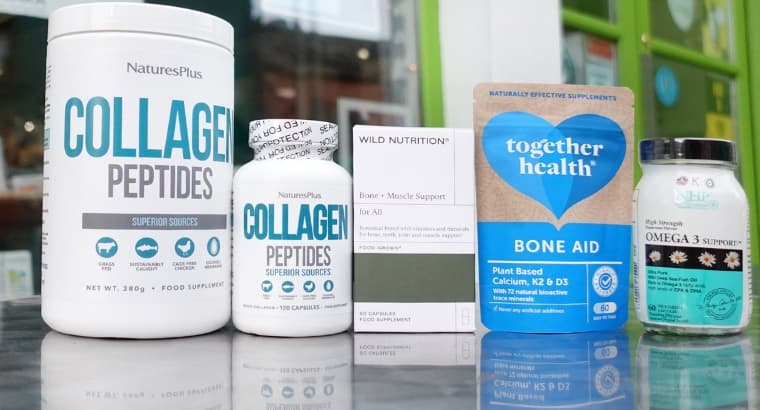
I’ve also learned that increasing collagen production can be very healthy for my bones. This could mean taking a collagen supplement, as well as making sure I’m eating plenty of collagen promoting foods. Eating a variety of healthy protein sources provides the amino acids our body needs to create collagen and other proteins. Fish, quinoa, bone broth, beans, chicken, and eggs are good sources. Supplement your diet with Vitamin C, copper, B vitamins, and foods rich in silicon like cherries, apples, tomatoes, and spinach.
Omega 3
I’m a big fan of Omega 3, but I learned something new while researching bone health which is that omega-3 increases calcium absorption, helping to reduce bone loss and maintaining mineral density within bones. According to a 1997 study in the journal Progress in Lipid Research, essential fatty acids “have now been shown to increase calcium absorption from the gut, in part by enhancing the effects of vitamin D, to reduce urinary excretion of calcium, to increase calcium deposition in bone and improve bone strength and to enhance the synthesis of bone collagen.”
Seaweed Calcium
Unsurprisingly, calcium intake is a very important factor in reversing bone loss. However, you might think all calcium is made equal, but that’s far from the case.
What type of calcium you take is very important. Ideally we would eat a large variety of green veggies for most of our calcium needs. However, there may still be a shortfall, so a supplement can be a good idea. I’ve always known that it was important to avoid chalk (calcium carbonate, found in many supplements) but I’ve actually come to realise that there’s only one form of calcium I want to take: algae or seaweed calcium.
Luckily, more and more companies are using seaweed-based calcium which is very bioavailable and is showing very very good results as a bone strengthener. Algae or Seaweed calcium comes from 100% seaweed, and a lot of the algae calcium supplements available in Ireland are harvested off the Irish coast. The seaweed absorbs trace minerals from surrounding seawater during its growth phase. When you look at the trace mineral profile of these seaweed calcium supplements, it’s extraordinary - there's around 74 different trace minerals (including magnesium) which are all important for our bone health. It’s also alkalising, which is an extra benefit for me on my bone health journey!
D3 and K2, trace minerals
Other important supplements that I’m taking include D3 and K2-7, which need to be taken at the same time as the calcium to increase absorption. I sometimes take these separately, and sometimes as a combined supplement. We have a number of different options to suit different situations - call in and we can show you.
Exercise
The other really important factor is exercise. A sedentary lifestyle is strongly correlated with bone density loss. I’ve bought myself a weighted vest, and I’m working up from 5kg to 8 kg. I wear this vest when walking our dog and every 30 steps so I jump - the impact from jumping jolts your bones and is thought to stimulate new bone cells to grow. I also stomp - I’ve read that this is also good! My aim is to introduce some weights, and I’m going to a pilates class weekly.
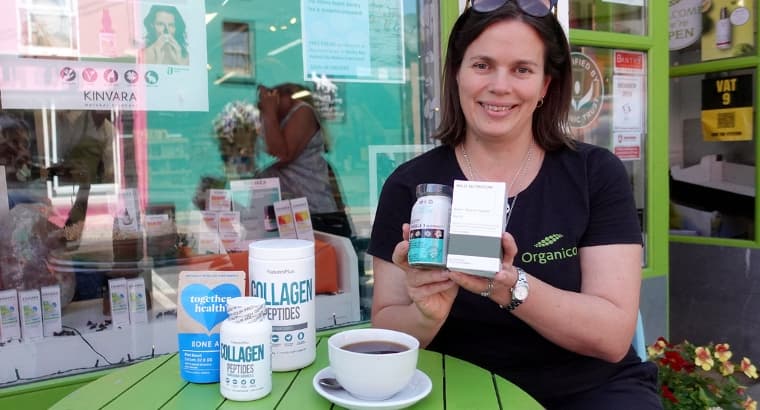
If you’d like to talk to someone about bone health, call in to Organico and ask to talk to Fleur as she’s really been focussing on it for a while now. We are happy to share any information we have that you might find useful. We can’t give medical advice but we can help you to see where you might be able to make diet and lifestyle changes that can bring significant benefits to your bones.
Totally agree as an acupuncturist that dexa scans are imperative to any woman going through menopause.
Also hormone blood work should also be done, thyroid and inflammatorymarkets too.
Unfortunately this is the tip of the iceberg for the menopause for our generation as we are being more informed of the menopause and not just brushed under the carpet. The generation behind us will be more informed.
Great article Hannah and I wish you good bone health.
Joanna
Hi Fleur
What supplements ( brand name also )
Fo u suggest for osteoporosis management. I have collagen peptides Vit D and k2 and omega 3
I've no calcium tho..I donewt togart dairy tho not dure if this is OK
Very interesting as I have osteopenia in my left hip and arthritis in the 2 lower disxs of my back at the moment I’m in agony with pain in my back and going down my leg will call in to Fleur
Thank you for your blog on bone health. I have a background in dance/fitness. Re exercise and bone density... Years ago I read an article about bone density in children. The article described how children who played more vigorously, including lots of jumping had stronger bone development/bone density than those who didn't. -The emphasis was on jumping, more than running around. Of course you'll want to protect your back from too much harsh impact, but incorporating small bits of exercise that include more repetitive jumping movements might really help. Your body will actually acclimatise to jumping more efficiently if you do a few in a row rather than one at a time. (6-8 minimum then build up) Other ideas could be...Skipping with a rope (even the easy one foot to one foot way!) Or very gentle aerobics. On a tangent... Tap dancing! It's surely the most fun way to get fit 😉 and there's plenty more impact jumping.
If you happen to take the exercising for bone density further, make sure to incorporate more abdominal exercises so your back is supported as you progress. Pilates videos give the BEST abdominal exercises. Most gyms are, unfortunately, below par in that department and even a lot of physios aren't aware of the safest methods to use. Pilates is by far the safest and most effective method for the lower back.
Best Wishes
Caitriona



Also hormone blood work should also be done, thyroid and inflammatorymarkets too.
Unfortunately this is the tip of the iceberg for the menopause for our generation as we are being more informed of the menopause and not just brushed under the carpet. The generation behind us will be more informed.
Great article Hannah and I wish you good bone health.
Joanna
What supplements ( brand name also )
Fo u suggest for osteoporosis management. I have collagen peptides Vit D and k2 and omega 3
I've no calcium tho..I donewt togart dairy tho not dure if this is OK
Many tks for advice
Amelia
Best wishes to Hannah
Anna Greenwood x
Thank you for your blog on bone health. I have a background in dance/fitness. Re exercise and bone density... Years ago I read an article about bone density in children. The article described how children who played more vigorously, including lots of jumping had stronger bone development/bone density than those who didn't. -The emphasis was on jumping, more than running around. Of course you'll want to protect your back from too much harsh impact, but incorporating small bits of exercise that include more repetitive jumping movements might really help. Your body will actually acclimatise to jumping more efficiently if you do a few in a row rather than one at a time. (6-8 minimum then build up) Other ideas could be...Skipping with a rope (even the easy one foot to one foot way!) Or very gentle aerobics. On a tangent... Tap dancing! It's surely the most fun way to get fit 😉 and there's plenty more impact jumping.
If you happen to take the exercising for bone density further, make sure to incorporate more abdominal exercises so your back is supported as you progress. Pilates videos give the BEST abdominal exercises. Most gyms are, unfortunately, below par in that department and even a lot of physios aren't aware of the safest methods to use. Pilates is by far the safest and most effective method for the lower back.
Best Wishes
Caitriona