This entry was posted in News, Menopause on 25th October 2022 by Hannah Dare
The Menopause. Does discussing it make you feel uncomfortable? There are so many topics that have traditionally been hidden away or unspoken in Ireland. Thankfully this is changing and as female biology is fundamental to our existence as a species it’s about time!
We need to understand what's going on
50% of us menstruate and sooner or later will go through the Menopause, and these are important aspects of our health that we need to gain a better understanding of.
In our family there is a tradition of organising talks about the Menopause. About 35 years ago, our mother Caroline organised some of the very first Menopause Days ever held in West Cork. In the meantime much has changed, but bringing women together to talk about this vital topic is still close to our heart - since 2020, over 1000 women have signed up to our online Menopause Webinars, so it’s clear that there is still a lot of interest in this topic.
Join us for The Menopause Breakthrough
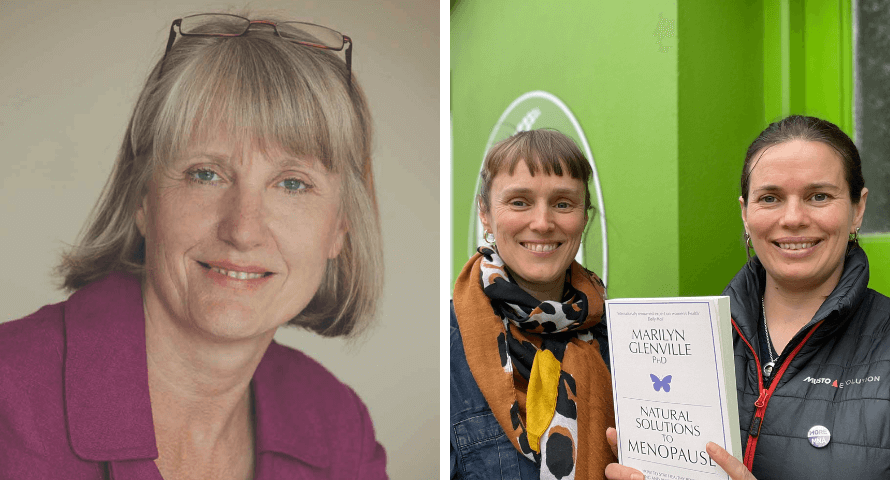
Which is why Organico is hosting a Menopause talk on November 10th called The Menopause Breakthrough with Dr Marilyn Glenville. This time it’s a Live Event at the Maritime Hotel in Bantry, and we are very excited to have Marilyn coming here in person to answer all your menopause questions.
I have to admit, my interest is very personal. When I first realised I was entering the menopause, I asked a few menopause experts why, if this is a natural transition, it’s so hard for some women? Why do we experience traumatic night sweats, disturbed sleep, anxiety, mood swings, joint problems and more? Why is it so disruptive?
The responses were varied, but basically one of the things I realised was that part of the ‘problem’ is that we are out of sync with our biology.
Our lives have changed
In earlier times, we would have started certain things at a younger age - primarily we would have had our children younger. And by our mid to late 40s, we would be grandmothers - not quite sitting back and enjoying the good life, but certainly not being up all night with young children, or juggling school runs, demanding jobs, and managing the stress of meeting mortgage payments.
We would have had the hardest more active parts of our lives completed, and the transition to menopause would quite possibly have been much easier with out all the modern day adrenaline-inducing stress.
The consequences of stress
‘Stress’ is the important word here. And the effect it has on our nervous systems, and hence on our hormones. Because much as we might be oblivious to it, those two are inextricably linked.
However, something that is often misunderstood, I think, is that it’s not necessarily as straightforward as the menopause causes stress - according to the experts I consulted, it’s the underlying (and often unrecognised) stress in our lives that is causing the problematic menopausal symptoms.
And this is an important distinction, because it means that one of the first things we need to examine when we enter perimenopause is the causes of stress in our lives. And then we need to consider how to reduce these stresses. Because if we don’t do that, and we simply focus on the symptoms, that stress won’t go away. We need to find and ‘treat’ the cause, not just the symptoms.
What's worked for me
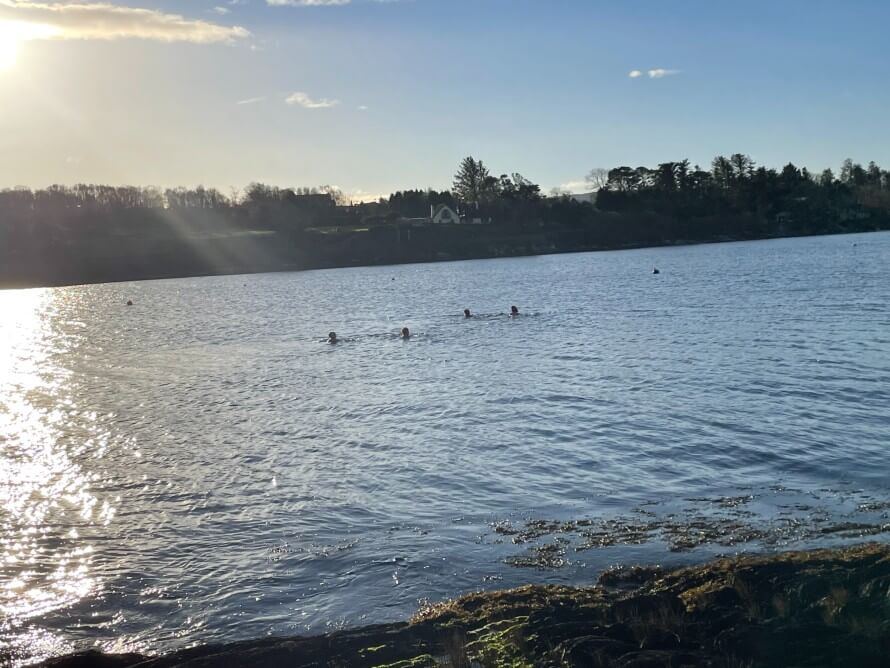
I found that I needed much more rest. For me, this meant cutting out caffeine, alcohol, late nights and trying to reduce my workload. Instead of parties, I started going to personal development workshops and swimming in the sea. I also took a variety of different herbs and supplements all aimed at calming my nervous system and helping me to deal with the stresses I couldn’t remove from my life.
And now, nearly 3 years on, I feel great. And I’m able to start socialising again - with caution!
I’m very aware that we are all different, and what works for me might not work for you. But we can all learn from each other, and be inspired to make simple changes that can make all the difference.
Your menopause questions, answered
The main way of working out what works for you is to ask questions, and learn - about yourself, about your body, and about what you need. What we found was the most effective for people during our Webinars was the Q & A. And with Marilyn this time, we are offering an extended Q & A - a space for you to bring your own questions and have them answered directly.
As someone who suffers from lupus and takes hydroxychloroquine, I feel that this drug makes my heartbeat faster. Couple that with the menopause and my heartbeat is running in the 90s the whole time. This induces feelings of anxiety constantly and I’m not sure sometimes if it’s menopause or my lupus /lupus medication.
Also a lot of supplements interact with the drug. Is there anything you could recommend for me? Thanks in advance.
I don’t sleep for more than 3 hours a night, I now am hyper tensive and my joints (both lupus and menopause related) are in tatters. I need a hip replacement and thus cannot exercise so am putting on weight rapidly! I feel like I am in a vicious circle!



Also a lot of supplements interact with the drug. Is there anything you could recommend for me? Thanks in advance.
I don’t sleep for more than 3 hours a night, I now am hyper tensive and my joints (both lupus and menopause related) are in tatters. I need a hip replacement and thus cannot exercise so am putting on weight rapidly! I feel like I am in a vicious circle!