Step aside, green tea. There’s a new antioxidant powerhouse drink in town. It’s made from a little berry that’s believed to reduce the risk of chronic disease. And one man is betting it could even reverse the environmental disaster caused by Irish agriculture.
We need to get more polyphenols in our diet
Because here in Ireland, we’re not getting enough.
(Polyphenols, by the way, are a plant-based compound found in fruit and veg. They act as an antioxidant. They’re one of the reasons that green tea is so good for you.)
The average adult in Ireland manages to consume about 550mg of polyphenols per day.
But according to Steve Collins, a medical doctor and food producer in West Cork who holds doctorates in nutrition and science, you need around 700mg of polyphenols per day to be in the safe zone. Ideally, you’d want to be getting over 1000mg/day.
Why are polyphenols so important to health?
Because not getting enough can come with serious consequences.
‘We’re facing a public health crisis,' Steve said in a presentation to Irish health stores. ‘Chronic illness is expected to shoot up in Ireland.’
‘We’re looking at more obesity, diabetes, high blood pressure… it’s going to be a huge burden on the economy as well as quality of life.’
On top of this, Steve shared, metabolic syndrome is now prevalent in Ireland.
Metabolic syndrome is recognisable by the ‘apple-shaped’ body type. When there’s a lot of fat around the centre, it indicates that fat is getting into your blood vessels. Once this happens, it starts bringing down every aspect of your health.
In fact, research is showing that metabolic syndrome could very well be the starting point for chronic ill health.
So how do polyphenols fight metabolic syndrome?
Well, it’s free radicals in the body that cause damage to the lining of the blood vessels…
Which allows fat to leak into places it shouldn’t be…
Which turns into the development of metabolic syndrome.
But polyphenols can destroy these free radicals before they do their damage, if you’re getting enough of them.
Polyphenols also have a major impact on metabolism, particularly glucose metabolism.
Every time you eat a carbohydrate, it’s broken down into glucose (primarily), as well as fructose.
Polyphenols have the ability to slow the digestive process down. They make sure the carbs you eat are broken down more slowly in your gut, and fewer of them are transported to your blood.
Overall, polyphenols make it less likely your blood sugar will skyrocket after eating by:
Increasing your sensitivity to insulin
Helping your body deal with glucose much faster
Protecting the pancreatic cells that produce insulin
Polyphenols can also help keep your cholesterol in check and reduce inflammation all over the body.
And since they’re so good at destroying free radicals, polyphenols play a big role in protecting the body from unhealthy ageing.
But, as Steve shared, maybe the most convincing case for upping your polyphenol intake comes from the PREDIMED study.
This epidemiological study tracked 7000 adults over five years. It showed that those with the top 20% polyphenol intake had 46% fewer heart attacks and strokes and 37% reduction in all cause mortality.
The takeaway? We'd all do well to get more polyphenols in our daily diets.
But how do you (easily) up your intake of polyphenols?
It’s true that 'superfoods' like açaí and turmeric have impressive amounts of polyphenols.
But you’d have to eat a mountain of these ingredients - every day - to get enough. Besides being difficult… it wouldn’t be pleasant.
Thankfully, you have another option.
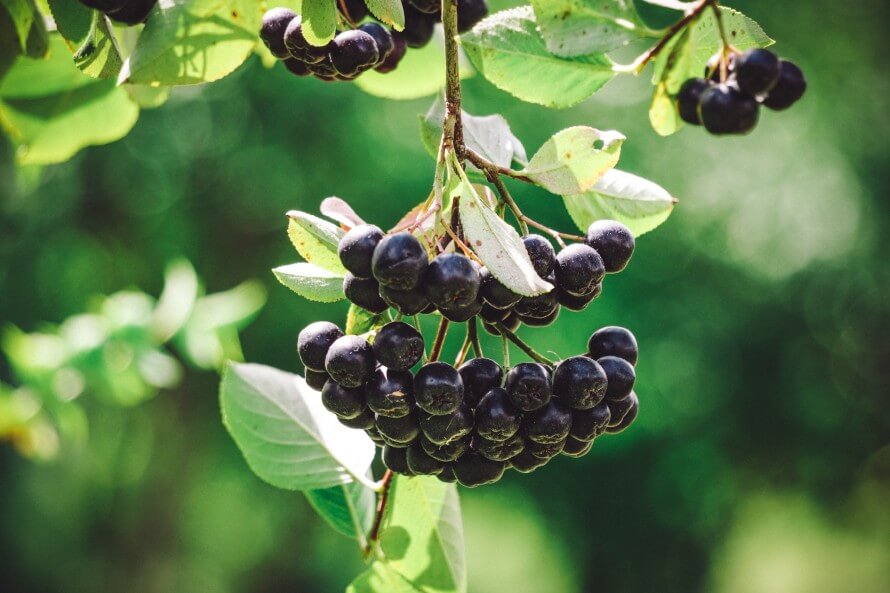
Aronia berries.
Aronia contains loads of polyphenols in a small daily serving.
It also contains high amounts of the most important sub-groups of polyphenols, including flavonols and resveratrol.
So where can you get aronia products?
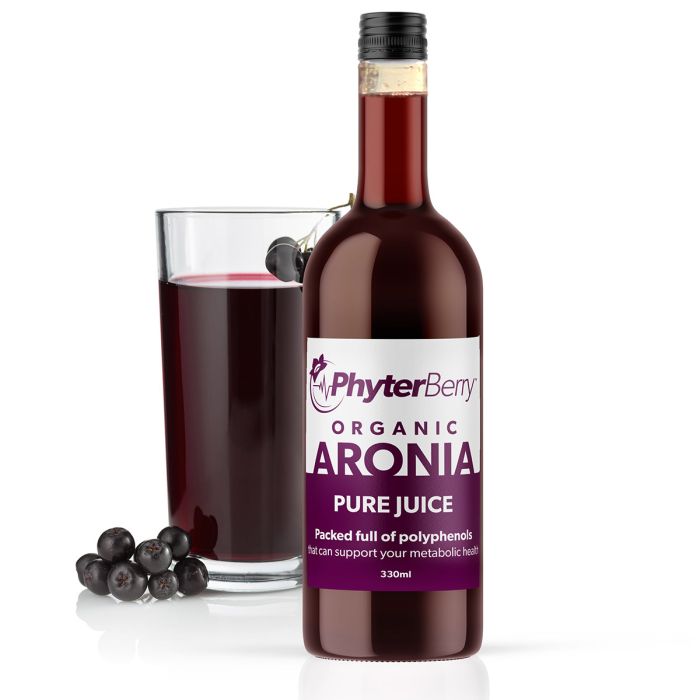
We mentioned earlier that Steve is also a food producer. He’s the very man responsible for bringing aronia juice to Ireland… and to Organico.
That’s right - you can get Steve’s aronia juice, powders, capsules, and concentrates at Organico.
Aronia juice
What does aronia juice taste like?
It's sugar-free, and tart instead of sweet. Steve describes it as astringent and sharp, but palatable.
It’s a flavour that grows on you - the same as a good wine.
In fact, you may want to approach aronia juice like a wine, because it tastes better if you sip and savour it rather than gulp it down.
It’s very refreshing. Especially when you mix it with sparkling water.
So, how much aronia juice should you drink each day?
Just a small 100ml serving each day will do you. That’s just a shot glass’s worth.
This serving provides about 400mg of polyphenols. Enough to help:
control blood sugar
improve blood flow
nourish the microbiota
and tip you well into the recommended range of daily intake of polyphenols
Steve’s juice is gently pasteurised so it retains a strong polyphenol content. He’s even had tests done to confirm this.
He says trials are showing that the 100ml serving of aronia juice is enough to slow digestion and drastically reduce blood sugar after eating - which has been proven by follow-up glucose tolerance testing, the same test that’s used to detect diabetes.
Aronia powder
Maybe juice isn't your thing, but you still want to get the benefits of consuming aronia berries. We carry a range of aronia powders which are easy to incorporate into your existing diet and lifestyle. They sprinkle well over yogurt or cereal, and can be mixed into your favourite smoothies and juices.
Plus, there are three powdered aronia products to choose from, each with their own unique benefits.
The classic Organico Aronia Powder comes in 100g tubs and contains about 25 servings (based on the recommended dose of a level teaspoon of powder per day—though you can kick this up to two, if you wish).
Consuming capsules is generally the quickest, most fuss-free way of getting your nutrients in. The Aronia Capsules have 60 units per container, with each capsule delivering 227 grams of polyphenols. The recommendation is two capsules per day, together or apart, and ideally with a meal.
Aronia concentrate
Lastly, the Aronia Concentrate gives another way of drinking your polyphenols. Just mix 15ml of the concentrate with some water—though there's no reason why you couldn't also try it in yoghurt or a smoothie. Yum!
A lot of potential in a little berry
Steve operates from his organic farm, called Derry Duff, in the hills of West Cork, near us in Bantry. (That's Rachel and Hannah visiting Steve at his farm in the top image.)
At Derry Duff, Steve cultivates fields and fields of aronia berries on what would otherwise be difficult land.
Side note: he also produces gorgeous organic blueberries which we plan to have available - in-store and online.
Besides improving the health of people in Ireland, Steve is also excited about how aronia berries could improve the future of Irish agriculture.
As he’s said, for the sake of the environment, we need to cut back on meat and dairy production in Ireland.
Steve believes growing aronia berries could help rural farmers transition from carbon-intensive livestock farming to more regenerative - and profitable - farming.
The 'difficult land' on Steve's organic farm, Derry Duff.
It’s definitely a cause worth supporting.
There’s a lot of potential in Steve’s aronia juice. Which makes us proud to bring it to you.
We’d love for you to order your bottle, drink it over a few days while you’re having a meal, and let us know what you think…
What do you think of the flavour? And how do your digestion and energy levels feel following a meal enjoyed with aronia juice?
I was feeling under the weather for a while at the beginning of the year. I started to wonder if my energy would ever return . A few bottles of that aronia juice later I was back to my former energy level plus plenty of extra! It certainly agreed with me. I like the flavour too







(Herbal syrup)…..
Remedy for (HSV),