Pass the Salt: Different Kinds of Salt & When to Use Them
This entry was posted in News, Natural Health on 1st May 2025 by Hannah Dare
This month, I’ve gone deep into the world of salt—its history, where we source it, how it has shaped civilizations, and, of course, which are the best salts to use in our kitchen.
A Brief History of Salt
Salt has influenced human civilization for thousands of years, shaping trade, economies, and even wars. Ancient cultures—from the Egyptians to the Romans—relied on it for preserving food and enhancing flavour. It was once so valuable that Roman soldiers were paid in salarium (the root of the word "salary"). Salt routes and monopolies fueled empires, and at times, access to salt determined the fate of nations. From medieval salt taxes to Gandhi’s Salt March, this humble mineral has played a surprisingly powerful role in history.
Before we go any deeper -A Quick Word on Celtic Salt If you're into natural health and food trends, you’ve probably spotted that some brands of Celtic Salt are priced sky-high. Here’s the truth: you don’t need to spend a fortune to get the good stuff.
As long as your Celtic Salt comes from France and has that signature grey hue (a sure sign it’s unrefined and unbleached), you’re getting the real deal. The hefty price tags on certain brands? That’s marketing hype—not a reflection of better quality.
We’ve sourced a brilliant option that delivers all the mineral-rich benefits without the inflated cost. Scroll down to see why we rate it so highly!
Where Does Salt Come From?
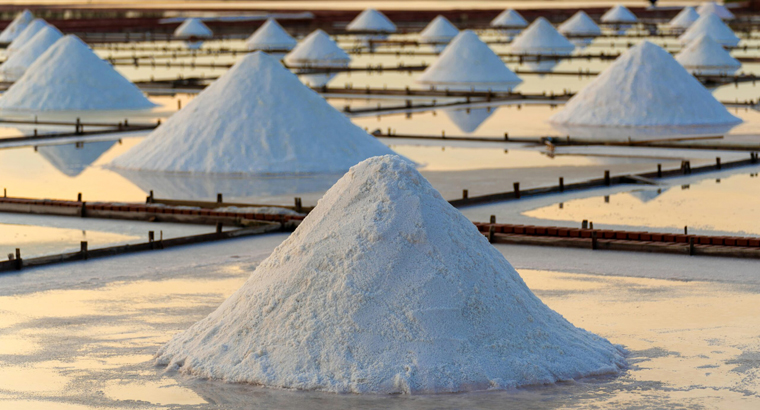
Salt is everywhere - it’s found in seawater, underground deposits, and salt flats.
Oceans hold the largest supply, with about 35 grams of dissolved salt per litre. Underground salt deposits, formed from ancient evaporated seas, are mined in places like the U.S., Canada, China, and Germany. Salt flats—like Bolivia’s Salar de Uyuni and Utah’s Bonneville Salt Flats—form when saltwater lakes evaporate, leaving behind vast crusts of salt.
Even Mars has traces of salt, hinting at the presence of ancient water!
Salt in Language
Salt has seasoned our language as much as our food.
Ever heard the phrase “not worth his salt”? It dates back to ancient Rome when soldiers were sometimes paid in salt. “The salt of the earth” (from the Bible) describes someone who is honest and reliable. “Take it with a grain of salt” suggests skepticism—possibly from the idea that a little salt makes something easier to swallow. Across cultures, salt has flavoured not just meals but the way we speak.
We all know that too much salt can be harmful, but sodium is still an essential mineral. The key is choosing the right kind of salt and consuming it in moderation, and being aware of all the ‘hidden salts’ in our foods.
If you're trying to be mindful of your salt intake, the main foods to keep an eye on are ultra-processed foods, which can contain shockingly high levels of refined salt.
Salty snacks: crisps, French fries, crackers, salted nuts
Cheese: brie, cheddar, mozzarella
Soups: tinned, frozen, powdered
How do we know if we’re eating too much salt?
While salt is essential for bodily functions, most people consume far more than they need. The recommended daily intake for adults is around 5g (one teaspoon IN TOTAL), yet processed foods can easily push us beyond this limit. Signs of excessive salt intake include:
Frequent thirst and dehydration
Swollen hands, feet, or face (water retention)
High blood pressure, which can lead to long-term cardiovascular issues
Headaches and a feeling of sluggishness after salty meals
One simple way to monitor your intake is by checking food labels—salt content is often listed as ‘sodium’, and 1g of sodium equals about 2.5g of salt. Cooking from scratch and opting for fresh, unprocessed foods can really help keep your levels in check.
What are the main different kinds of salt?
I once saw a documentary about a shop in Japan which sold over 300 different types of salt! That seems a little excessive, but I do like to have a variety of salts in my kitchen (and some others in my bathroom).
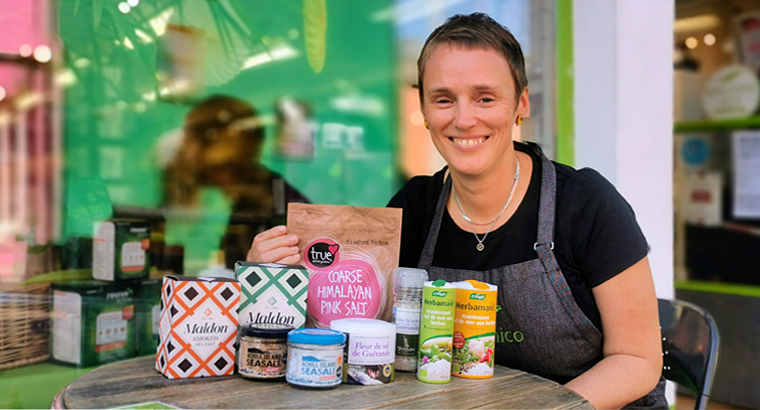
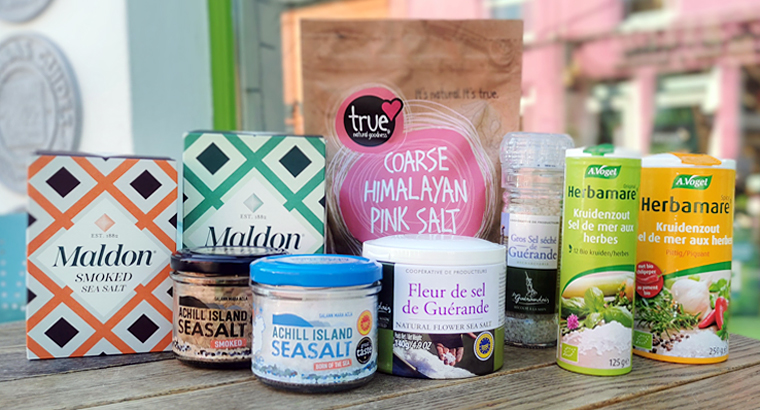
In Organico, like many health food shops, you’ll find a wide range of different salts (though you won’t usually find Table Salt, as we don’t rate it either for flavour or health).
What’s the difference between table salt, sea salt, Celtic salt, and Himalayan salt?
Not all salts are created equal! While they all share sodium chloride as their base, their sources, mineral content, and processing methods vary greatly:
Table Salt: The most common, highly refined salt. It’s stripped of minerals and often contains additives like anti-caking agents and iodine. It’s the type of salt most commonly found in ultra-processed foods and is often responsible for contributing too much salt in our diet.
Sea Salt: Harvested from evaporated seawater, sea salt retains trace minerals like magnesium and calcium, which contribute to its flavour and potential health benefits. The texture and taste vary depending on the source, with options ranging from fine to coarse grains.
Celtic Salt: A specific type of sea salt from the coastal regions of France, Celtic salt is unrefined, naturally grey in colour, and retains moisture. It’s packed with over 80 trace minerals, making it a great choice for those looking to boost electrolyte balance.
Himalayan Salt: Mined from ancient sea beds in the Himalayas, this pink-hued salt is rich in minerals like iron, potassium, and magnesium. It’s less processed than table salt.
Each type of salt has its place, and choosing the right one depends on your dietary goals, taste preferences, and cooking needs.
What are the best salt options for cooking and health?
Best for everyday cooking: Sea salt (I prefer the French grey fine salt personally - also known as Celtic Salt) and Himalayan salt offer great flavour while providing trace minerals. Use fine sea salt for general cooking and baking and coarser salts (or a flakey salt like Maldon or Irish Atlantic Salt) for seasoning dishes just before serving.
Best for mineral content:Celtic/French Sea Salt is a also good choice for those seeking a mineral-rich, unrefined option.
Best for fermentation and curing: Coarse sea salt, French Salt or Himalayan salt all work well as they don’t contain additives that might interfere with fermentation.
Salt & Cooking
Different salts bring different flavors and benefits to the table. Whether you’re using flaky sea salt for finishing dishes, Celtic salt for its minerals, or Himalayan salt for its subtle flavor, knowing your salts can elevate your cooking.
Ultimately, moderation is key—choosing a quality salt is important, but reducing processed foods is even more effective in managing sodium intake.
Salt Beyond the Kitchen
Salt isn’t just for cooking—it has many therapeutic uses, for example:
Salt Caves & Halotherapy – Breathing in salty air can help with conditions like asthma, COPD, and inflammation. Check out Salt Cave Ireland to see just how popular these are becoming in recent years.
Salt Floats – My personal favourite! Float tanks, filled with high levels of magnesium salts, allow you to float effortlessly, helping to relax the nervous system. I love visiting the Zero Gravity float tanks in Cork.
Salt Baths – Adding sea salt to your bath can help with skin conditions like eczema and psoriasis, as well as soothe sore muscles after a workout. I use coarse Celtic salt for this.
Magnesium Salts (Epsom Salts) – Magnesium flakes are reat for increasing magnesium levels and easing muscle tension. Try mixing them with sea salt for an ultra-soothing soak.
Inhaling Salt & Nasal Washing – Gargling salt water or using a saline rinse with a Net Pot can be great for sinus health and soothing a sore throat.
Final Thoughts
Salt is so much more than just a kitchen staple—it’s a key part of history, health, and therapies. Whether you’re enjoying a salt float, using a salt scrub, or simply sprinkling the right kind of salt on your food, it’s worth taking some time to appreciate this humble yet essential mineral.
This entry was posted in News, Natural Health on 1st May 2025 by Hannah Dare
Win €100 Organico Gift Voucher
Subscribe to our newsletter to enter our monthly giveaway.
Giveaways run from June to November 2024. Unsubscribe any time. Terms and conditions apply.
It is a pity you do not metion the important function of iodine for the body.
You only give a hint as if iodine is bad for someone to take in.
While it VERY important for body functions.
Especially because nowadays the food that people can buy is derived from a lot of good supplements and minerals, which make them way less suitable for a healthy meal



You only give a hint as if iodine is bad for someone to take in.
While it VERY important for body functions.
Especially because nowadays the food that people can buy is derived from a lot of good supplements and minerals, which make them way less suitable for a healthy meal