We chat with the makers of Nibbed so you can meet your newest healthy chocolate obsession
This entry was posted in News on 22nd June 2021 by Marci Cornett
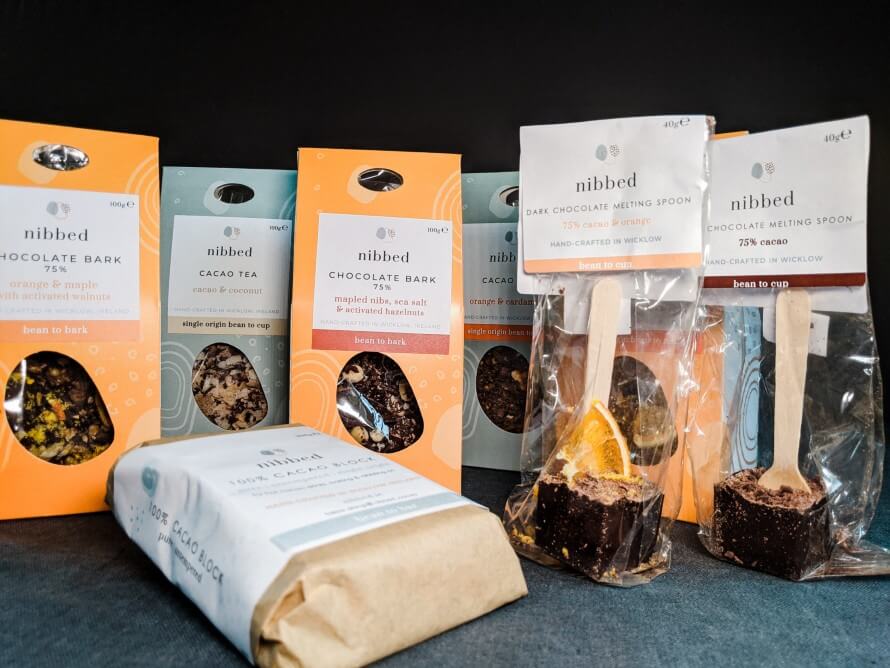
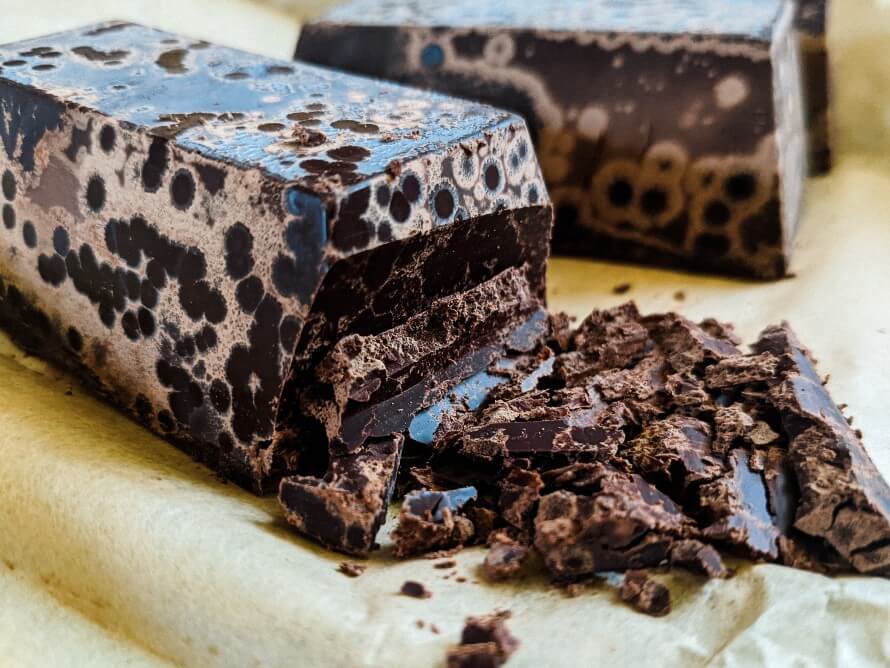
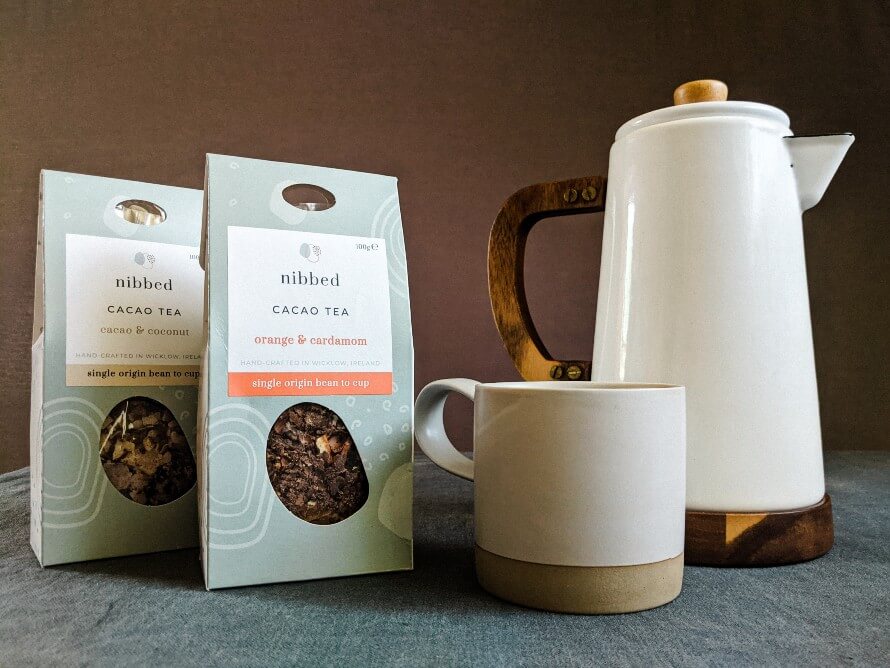
Once you taste the minimally processed cacao teas and treats from Nibbed, a women-led company in Wicklow, you’ll understand why the definition of cacao in the ancient world was ‘food of the gods’. We chatted with the aunt/niece duo who run Nibbed, Lisa Kleiner and Anna O’Sullivan, to find out how they manage to preserve cacao’s inherent health properties while still creating chocolate that tastes exquisite and easily slips into your daily routine.
Creating a healthier chocolate company
Nibbed came into being during the 2020 lockdown when Lisa, a chef with a degree in Nutrition and a masters in sport and exercise nutrition, began exploring chocolate making and the healthful properties of the cacao bean.
While Nibbed was still in the idea phase, Anna came on board to contribute her design and wellness marketing know-how, and before long, the company was up and running with an impressive line of unique cacao-based products.
Cacao as healthy as it’s meant to be
Nibbed’s ingredients are 100% real and recognisable. You’ll find NONE of the unhealthy ingredients common to commercial chocolate products - NO white sugar, vegetable fats, dehydrated dairy, soya lecithin, or vanillin.
Their highly aromatic cacao comes from sustainable, fair-trade farms in the Domincian Republic that support local biodiversity.
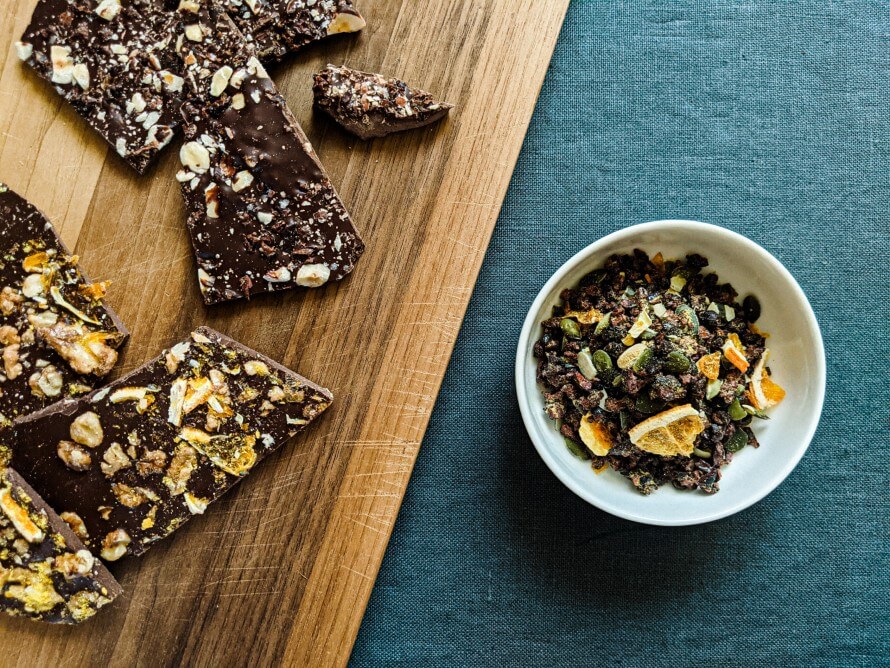
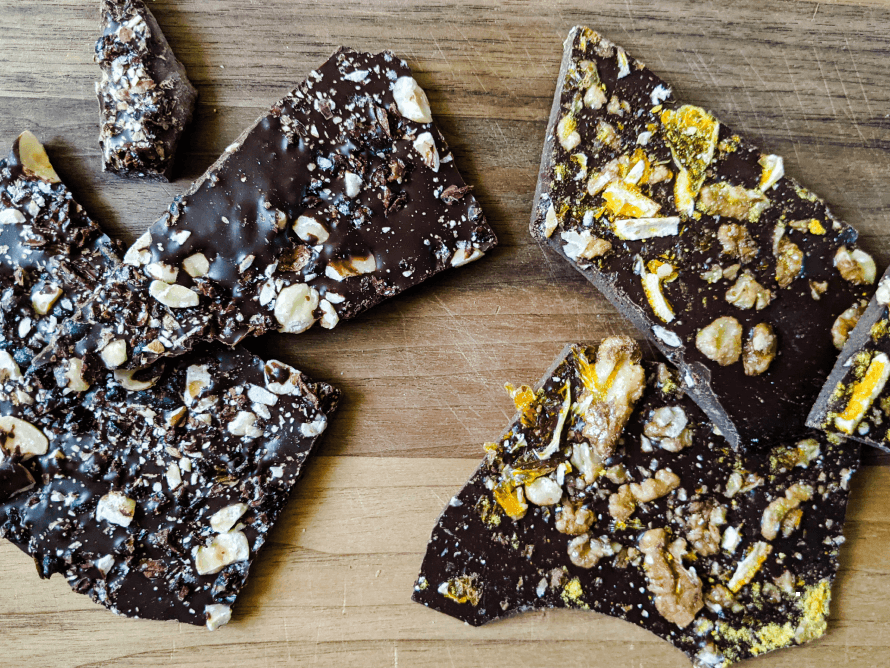
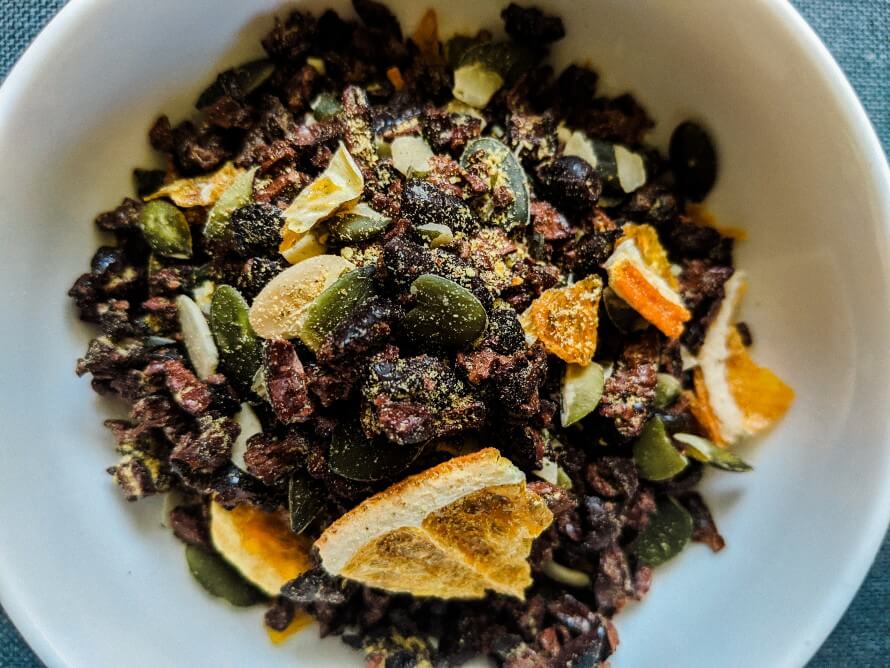
They take great care with their added ingredients: Lisa activates the walnuts, hazelnuts, and pumpkin seeds by soaking them then dehydrating them until they’re crisp. This process eliminates the naturally-occuring phytic acid so the nuts and seeds become easier to digest.
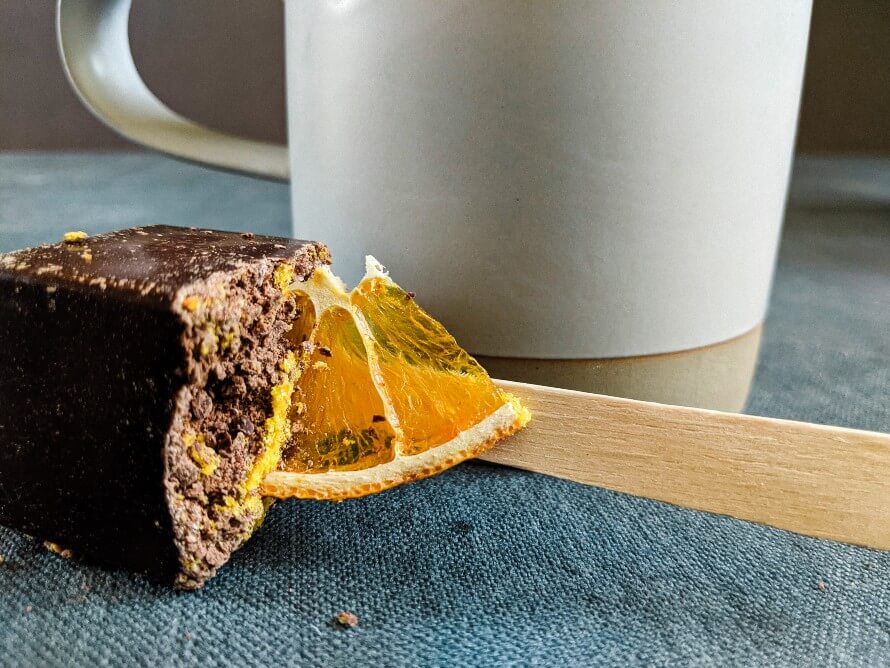
Lisa makes their organic orange powder in-house. In fact, the day we spoke to her via Zoom, she showed us around the kitchen where there were trays and trays of bright orange slices awaiting the dehydrator.
Nibbed’s products contain only natural sweeteners (coconut sugar and maple syrup) and these are used judiciously, so what you get first and foremost is the exquisitely complex flavour of the cacao.
Better for the environment
As a bean to bar company, Nibbed took the opportunity to use every single part of the cacao bean - husks included - so nothing goes to waste.
They also use a mix of recyclable and compostable packaging so no part of the Nibbed experience ends up in the bin.
Our chat with Lisa and Anna of Nibbed
What are some ideas for using Nibbed cacao to create daily rituals at home?
Anna: The cacao has theobromine in it which has really energising properties, so it's great to take a cup and then do a dance afterwards. It gets the creative juices flowing - you have a drink and you just feel so uplifted. Cacao also has amazing heart-opening effects so it’s lovely to share with friends.
What's your favorite thing to do with the 100% cacao block?
Anna: Well, I'm obsessed with it. I used to drink green tea and yerba-maté. I’ve never been able to drink coffee, or I would have a panic attack because I'm so sensitive to coffee and caffeine.
Now, in the mornings I make a drink with the 100% cacao block. I put in cardamom and cinnamon and sometimes lion's mane, or other medicinal mushrooms, and a bit of coconut oil, and sometimes I put in a bit of oat milk, like a dash. And then I put it into the blender for a few seconds, and it just becomes so creamy and frothy.
And that’s my morning energiser - I don't need coffee or green tea anymore - that's what I use for my morning stimulation.
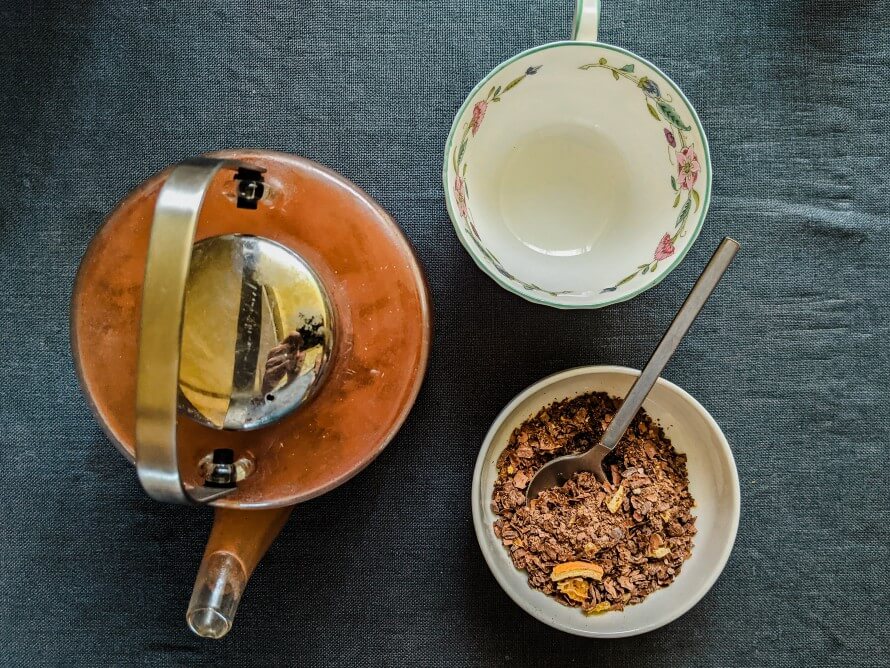
Lisa: So I find the 100% cacao on its own very hardcore, but I do love baking with it. Anna’s the 100% cacao promoter, and I'm the tea-lady around here, because the teas were my baby from the beginning. That was the original product. I drink the coconut and cacao tea by the bucketload, which actually has the 100% cacao in there as well as the cacao husks.
I don't drink the 100% by itself, and I'm always amazed that people don’t put sugar with it - like Anna who would just eat it on its own. But I absolutely adore packing it because when it comes off the melanger (a type of chocolate grinding machine), for me it's like liquid gold. I just love the smell.
Anna, you’ve said you want to help people appreciate the more bitter qualities of chocolate, so when we’re tasting at home, what should we be noticing to start developing our palates?
Anna: I know when I first started eating dark chocolate I didn’t like it - I was so used to having sugar just completely coat my tongue and the flavour of the chocolate was masked with sugar and dairy. But after getting past that initial shock of the bitterness, if you can just let it sit, then you can taste the depth of flavour. So with our beans, you’ll notice notes of honey and peanut. It's like wine, and you start to go, ‘okay, I can actually taste more than just that initial sugar hit,’ and you start to really develop your taste buds.
Yeah, all that sugary stuff tastes like a completely different food compared to what the Nibbed range tastes like.
Lisa: Yeah, we're so conditioned by the chocolate industry, and we're so used to eating all these mass-produced products. The first thing I always look at is a label: what is the first ingredient in the chocolate? And it's amazing if you do go into supermarkets - even the “healthy chocolates,” their first ingredient is sugar, and then the products have so many different preservatives. And that always concerns me, especially in a bar that should be high cacao. The first ingredient has to be cacao, in my opinion.
And one thing I was reading about in the chocolate industry is they put a lot of processes and chemicals in place to strip off the acids and to remove the bitters. But that is what chocolate’s about, as Anna said. It'll hit you at the front of your tongue, and as it moves back, you progress back into the acidic flavours. So you'll always start back in and the acids will always hit you last. And I always think as I eat it, wow, there's just one flavor hitting after the next, after the next, after the next...
Beyond the lack of sugar, dairy, and preservatives, what is it that makes your chocolate so remarkably different?
Lisa: So there are three different types of beans in the world: Criollo, Trinitario, and Forastero. And Forastero is the one that is predominantly used in the chocolate industry because it's much hardier against the weather and it's much easier to grow. And then there is the traditional Criollo, which is the very, very old-fashioned great coming from South America and Trinitario.
The bean that we use is a combination of Criollo and Trinitario, it's coming from the Dominican Republic. They're called Öko-Caribe and they're very clean. They're beautiful and they're really black inside, the kernel is very dark.
One of the most important things I said in the beginning was that I want to know where our beans come from. I want to make sure that the people who are growing them are being looked after, because there’s slavery throughout so much of the chocolate industry.
We do pay a premium price. We buy all our beans through a Dutch importer who has direct contact with the farms. He supplies from maybe about 28 different places in South America. So it's a social enterprise and it's going back to the farmers, which is really important, and they are getting a good price for their beans.
Basically what happens is the beans are gathered from the 28 different farms and then they're all fermented over a few days. After that they’re dried, and then they get bagged.
We roast the beans in little coffee roasters. We have a winnow machine that separates the husks, then we put them into what we call a conche and a melanger, which are big granite stones that additionally grind the beans down, and then you just leave it in there to work its magic over a certain number of hours. This removes the acidic volatiles that are brought out through fermentation and develops the complex flavour.
Lisa, during the first lockdown you did a lot of research into chocolate making and the health properties of cacao before starting Nibbed. Did you do all that research knowing it was going to turn into a business?
Lisa: Basically what happened was I was put on furlough and then I was brought back to work in a terrible position and I decided I couldn’t cope, and I decided to leave. But I always wanted to do something with chocolate. I had no idea I was going down this route. I always thought, I’ll be a chocolatier and I'll make fancy things and stuff like that, but I'm not a really patient person, so I don't know why I thought that would work.
I went down to Exploding Tree Chocolate and I did a two-day workshop with Allison (Roberts) and while we were down there, I kind of thought, I don't actually want to make chocolate, I’d just love to do the teas. That was last September, and I suppose from there the idea just grew momentum. I started with the teas and then went, ‘well, I need to use the nibs anyway,’ so I thought, well, let's buy one little machine and start, and then we’ll buy another little machine, and then we’ll buy the big machine...
You know, it's funny, it's kind of just grown organically over time. We were in product development and Anna would come and she'd go, ‘I don't like that. I don't like that. I like that…’ and then she’d take it back to her friends and try it on them and through that we built the range of products.
It's been funny with the creativity - my mind never stops, it actually never stops. I have another ten products in my head ready to go.
When you’re developing a product, do you have a specific idea of what ingredients and flavours you’ll use, or does that come along the way?
Lisa: I think for me, again, what happened was when I started with the teas, a friend of mine was a development chef, and we sat down and all we had was the husks, and we started adding different things to them. I mean, the tea we're making now is so different.
But at the time, I said I'd love to dehydrate, and it was actually vanilla I wanted to dehydrate to make a powder. So he said he’d lend me a dehydrator. And then I went, ‘Oooh, I wonder what else I could do,’ because I've never used one before.
So I bought every fruit and some vegetables, even beetroots, and I had everything in the dehydrator. From there, it transpired which ones would work and which didn’t.
Anna: When I was in Australia I worked for a health company and we did activated nuts over there. So when we were coming up with ideas for Nibbed, I thought ‘what about activated seeds and nuts?’ So there was a lot of stuff that was coming and we were like, ‘oh god, what was that?' But it just eventually gets there in the end. And it's so exciting to see what you had at the start compared to what it’s like now.
For you, Anna, has all the health properties associated with cacao been an eye-opening experience or did you know coming into it that chocolate, when minimally processed, can be so healthy?
Anna: Yeah, I stopped eating dairy in general years ago, and then I've been eating dark chocolate for years now. I've always been interested in the health benefits of foods, and I went to a few cacao ceremonies on my travels and I was really into that.
And I used to always have drinks made with just cacao powder. And then when Lisa started making the teas and the 100% cacao - she was paying me in cacao blocks - and I thought it was just amazing.
Because I really notice - I'm very sensitive to certain things, like coffee or if I have something that's very sweet, I notice the effects. When I drink our 100% cacao, I feel great in myself. So I'm almost my own guinea pig, and I know that it works.
It's incredible that you're going to such efforts to source the cacao, and then to make your own orange powder, and to activate the nuts and seeds, everything is carefully prepared and there’s so much attention to detail. After all that work that goes into each product, what is it that you want the person who tastes the tea, or the bark, or the nibbles to experience?
Lisa: First of all, smell. Because for me, every time I open one of our products, it’s smell that gets me first - it's the cardamom or the orange, even just the smell of the cacao. And you can smell that it's a really natural, fresh product.
I want them to experience something that maybe they've never tried before and to enjoy it. My brother was very funny a few weeks ago, he wouldn't be a very dark chocolate person, and he tried one of the barks and he was like ‘oh god, I don’t know…’ because it was so different. And then by the end of the day, he had the whole box eaten, so it was ‘Lisa, can you send me some more?’
And that's why people, when they eat the activated nuts in the barks, I want them to go ‘those nuts are really different, why are they so crunchy and how are they so nice?’ Because I never knew any of this stuff - it's been a huge learning curve, but I wouldn't eat nuts now unless they were activated because they're just so much better. The powders as well, the orange powder is just so much better than anything artificial.
I think the food industry is a really corrupt space where people are saying their products are natural and they're adding all these artificial flavours and colourings and things to the products that don't need to go in there.
There's a lot of work that goes into every single one of our products. It's not just a small step of melting down chocolate and making the bar. Every single one of them has components to it that take a lot of preparation. And that's what I want people to experience while they’re tasting, and I want them to enjoy it as well.
Last questions - do you have a favorite among the Nibbed range? Any unusual ideas for enjoying them?
But if you want something I use differently - it’s my smoothies. I hate spirulina and I hate all those green powders, but I know they're really good for me. I put them into a smoothie and I put in a drop of orange or peppermint oil. And then I add the nibbles into that. So then there's crunch, so I’m eating my smoothie the way they say you should - you should eat your smoothies and not drink them so fast. The nibbles make me drink slower and they add so much better flavour and crunch. It's more of a meal than a drink
Lisa: I have to say my favourite is the coconut cacao tea. I have to be honest with you, the first time I ate a bean, I thought I was going to get sick, but now I can eat the nibs and it's no problem. And I actually enjoy the nibbles and they're really nice to use in baking. You can throw them into brownies or into your mixes, you can put them into scones.
The husks are something I want to develop out a bit more as well. The husk is full of fibre. It's so good to have as a substitute for other fibrous foods within bread. So it's really good for fortifying and reducing flour and adding husks instead. Currently they use the husks a lot for fortifying food for animals. I don't know why we're not using it for humans.
I also want chefs to use the 100% cacao, I suppose because I'm a chef, and in the industry I come from, we're so conditioned to use these really processed tempered pellets. Whereas, this is so different. You have to temper it yourself, but the depth of flavour you get from a brownie made with 100% cacao is incomparable.
To enjoy at home
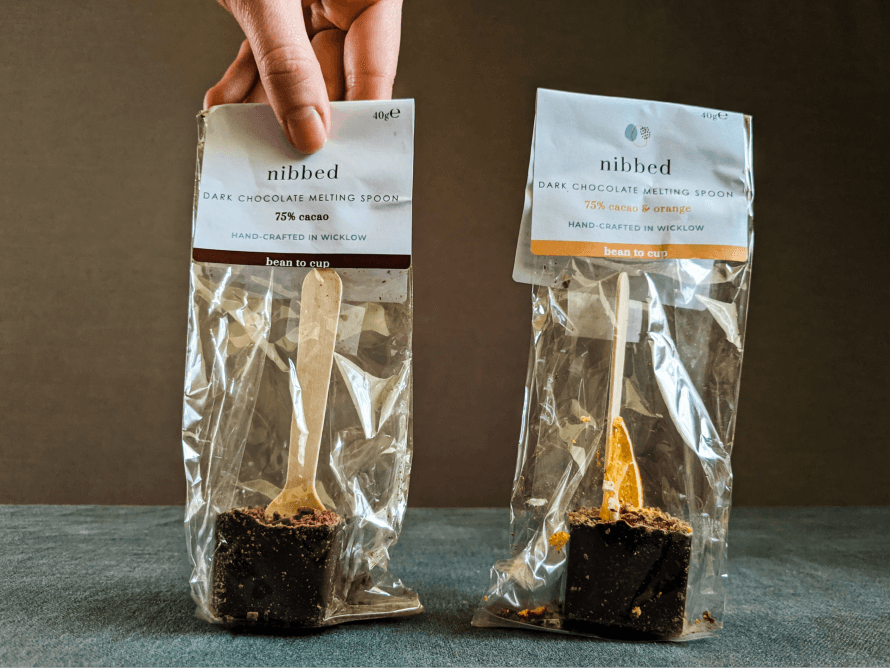
We’ve been so excited to share Nibbed with you because we love everything from them - every single tea and treat in the range is an experience that’s at once exhilarating for the taste buds, but also soothing for the spirit - absolutely perfect for creating your daily cacao ritual.
You can order their entire range at organico.ie or by shopping with us at Organico Shop in Bantry. And do let us know what you think of Nibbed, and what type of ritual you create around them.
This entry was posted in News on 22nd June 2021 by Marci Cornett
Win €100 Organico Gift Voucher
Subscribe to our newsletter to enter our monthly giveaway.
Giveaways run from June to November 2024. Unsubscribe any time. Terms and conditions apply.