Irish Wine: Vineyards & Organic Wine Production in 2025
This entry was posted in News, Irish Suppliers on 25th July 2025 by Grace Austin
If the concept of Irish wine sounds, well... a bit foreign to you, you wouldn't be alone. Ireland certainly isn't known for its vineyards—but they are, in fact, in existence, and there is a movement of producers who are bottling their own remarkable Irish wines.
We recently had the pleasure of hosting David Dennison, the man behind the brand Viking Irish Drinks, who came in-store to tell us all about their range of organic Irish wines, and what's happening in the world of Irish grape growing.
Irish wine: A brief history
"We don't really have a history of Irish wine", says David, although he caveats that back in the 1800s, there were producers making small batches of wine, mostly from grapes grown in greenhouses.
Fast forward to the 1970s, and Ireland saw a resurgence of domestic wine production that lasted close to fifteen years. This was spearheaded, mainly, by half a dozen winemakers who have long since ceased operations.
In David's eyes? The varieties of grapes that were historically planted in Ireland are less than ideal for our climate—one which, for the vast majority of the year, hasn't traditionally been conducive to a good grape harvest.
What does the Irish vineyard scene look like in 2025?
If you were to hazard a guess as to how many vineyards are in Ireland in 2025, what would it be?
Go on, have a go.
According to David, the number of active vineyards in Ireland is as high as 42. While David's own vineyard is in East Waterford, here in West Cork, he's even helped establish a fledgling plantation over at Brown Envelope Seeds in Schull.
Viking Irish Wines: A look at the range
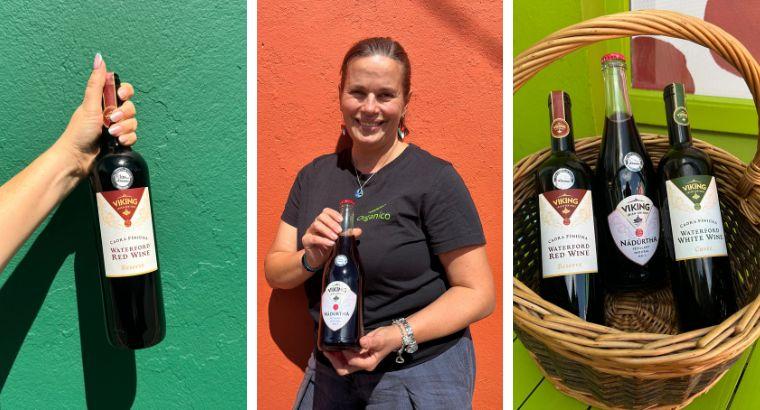
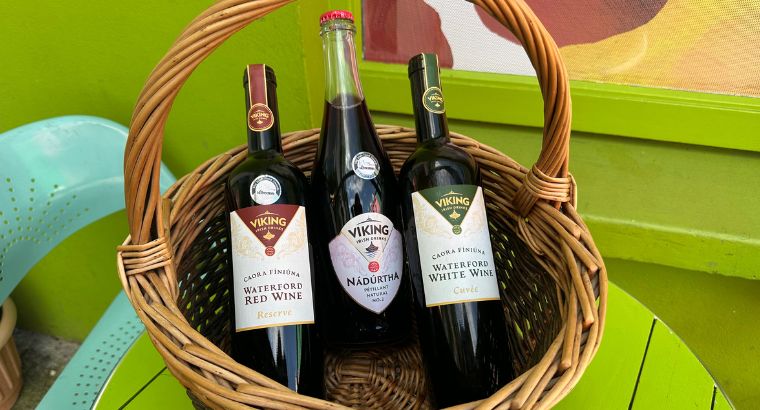
David's vineyard produces small, exclusive numbers of each wine throughout the year (and yes, they're all organic). Currently, their range includes:
Red PetNat: A lightly sparkling, or 'petulant', red produced with a red grape called Rondo.
White Cuvee 2023: Made from a blend of three different grapes—solaris, seyval blanc, and schonburger.
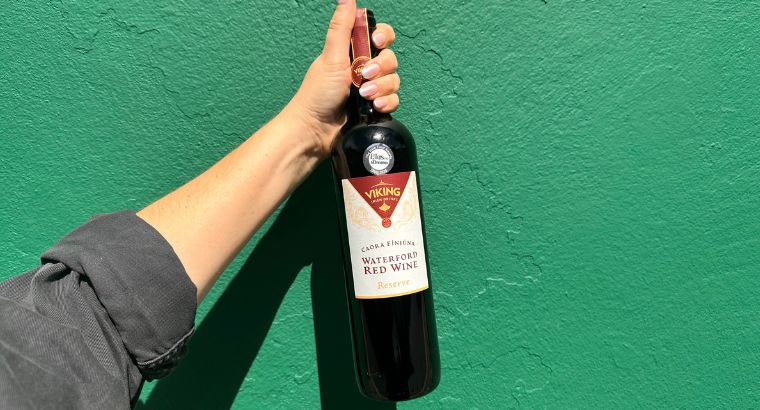
2022 & 2023 Reserve: Two flavourful red wines aged in Burgundian oak
David opts for a hybrid variety of grape called a piwi, a particular crossbreed between the vinifera and riparia grapes. With fourteen different varieties currently growing on their vineyard, David prioritises varieties that favour the temperate Irish climate.
One such variety is cabernet cortis, the offspring of a cabernet and solaris—so one red and one white parent. In terms of flavour, David reckons the predominant flavour is that of a Cabernet Sauvignon.
What does the future of Irish wine look like?
With climate being perhaps the biggest factor to consider, David believes that careful selection of species is what will lend itself to the success of the burgeoning Irish wine market.
Questions have been raised as to whether climate change may, in fact, positively impact Ireland's ability to produce wine; meanwhile, soaring and harsh temperatures on mainland Europe are threatening the quality of grape yields. While only time will tell, the Department of Agriculture have indicated that specific funding may become available to Irish vineyards in the future.
"It's very possible to grow grapes in Ireland," David says, "And if it's done properly, you can make really decent wine."
Shop Viking Irish Wine at Organico
Piqued your curiosity? We're delighted to now be stocking Viking Irish Wines, and you can purchase them in-store or online and have them delivered straight to you.
This entry was posted in News, Irish Suppliers on 25th July 2025 by Grace Austin
Win €100 Organico Gift Voucher
Subscribe to our newsletter to enter our monthly giveaway.
Giveaways run from June to November 2024. Unsubscribe any time. Terms and conditions apply.