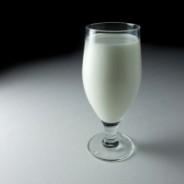
How healthy is milk?? By Hannah Dare of Organico Bantry. (Published in the West Cork People October 2010)
We are constantly told that milk and dairy products are essential for our health. But what if that is simply not true? What if, instead, milk products are not suitable for adults and should be only eaten very rarely? This month I have been reading about milk and its connections to serious illnesses like breast and prostate cancer, and looking at whether it is actually a good source of minerals or protein. Given that I really enjoy cheese and milky coffee, this has been difficult to research, but I am more and more convinced that we should enjoy dairy products as a treat rather than as the backbone of our diet. Have a read and see what you think.
Cows’s milk is essentially a food that is produced for calves. When they reach a certain size calves no longer drink milk, they eat crass and cereals – foods more suitable for their system. Like calves, human babies just drink milk for their first 6 months of life, but as they get older they move on to other foods. Humans are the only mammals who drink another animal’s milk after infancy. If it’s unusual to see a 4 year old baby breastfeeding from its mother, why are we giving 4 year olds glasses of cows milk?
Another question – what effect does cows milk have on calves? It makes them grow, very fast, into very large cows. So what effect do you think cows milk might have on children – or on adults? Cow’s milk contains a hormone called IGF-1 that promotes this rapid growth. Patrick Holford, a leading UK nutritionist, says there is nothing wrong with IGF-1 (in fact we produce it ourselves when we are babies), ‘it’s just that we aren’t designed to be eating sources of it in adulthood’ because it is stimulating growth in areas like breast tissue and prostate tissue which should not grow after puberty (The Optimum Nutrition Bible p 65).
China, which has a very low dairy intake, the breast cancer rate is 1:10000 compared to 1:10 in the UK. This could be unrelated – but research seems to be backing up claims that there is a link between dairy intake and certain cancers. A recent study in China found that the higher a woman’s blood level of IGF-1, the higher her risk of breast cancer. Another recent study from York University found that men in the top 25% of IGF-1 levels had three times the risk of prostate cancer. And it has been found that those of us who eat meat and dairy products have 9 times more IGF-1 in our blood than people who avoid them (all figures taken from The Optimum Nutrition Bible).
Living without dairy is not actually unusual in many countries: in China, India, and large parts of Asia and Africa people eat very little dairy and traditionally less meat than we do. In fact, worldwide, more people don’t eat dairy products than do!
So why are we in the West told to drink milk? One reason is that it is thought to be a good source of minerals, for example calcium. But interestingly, milk may actually contain too much calcium, which may be among other problems leading to a deficiency in magnesium which is as essential as calcium. Holford says: ‘The ideal calcium to magnesium ratio is 2:1 – you need twice as much calcium as magnesium. Milk’s ration is 10:1, while cheese is 28:1. Relying on dairy products for calcium is likely to lead to magnesium deficiency and imbalance’ (The Optimum Nutrition Bible p 63). And what does magnesium do? It builds bone density, it protects our nerves, keeps our muscles working properly (magnesium deficiency can lead to period pains, and muscular spasms and twitches, especially at night). And a lack of magnesium is associated with heart disease, (people who die from heart attacks are found to have abnormally low levels of this mineral). Not a mineral we want to become deficient in!
Instead of looking to milk and dairy products for minerals, many leading nutritional therapists are recommending nuts and seeds which contain balanced levels of minerals more suitable for adult humans. To quote Patrick Holford again: ‘Seeds, nuts and crunchy vegetables like kale, cabbage, carrots and cauliflower give us both these minerals (calcium and magnesium) and others, more in line with our needs. Milk is, after all, designed for young calves, not adult humans’. And as one article I read recently pointed out, cows create milk, (with all its calcium) and grow strong bones themselves, simply from eating green leafy things that grow in the ground – so perhaps we can do the same!
Another reason given for eating dairy products is for the protein content. But again, Patrick Holford argues that we don’t need dairy, or indeed meat, for protein levels. He recommends a minimum of meat, say 3 portions a week, because meat also contains growth-promoting hormones which are dangerous to health, and a good amount of healthy fish (organic salmon, now being farmed in Bantry Bay, is good). He advises tofu, quinoa, lentils, and eggs, nuts and seeds for calcium and protein, and lots and lots of vegetables for all the other minerals we need. You can add toasted sunflower and pumpkin seeds to your meals very easily – to stir-frys and salads, and raw seeds to porridge and or with dried fruit as a snack. You can also get spreads made from sesame seeds, sunflower seeds and various nuts which are excellent sources of calcium and minerals.
Cheese is harder to find a substitute for. Personally I can live without milk pretty easily but life without cheese would be very hard for me! I try to eat sheep or goat’s cheeses as they seem easier to digest. Good news though is that yoghurts, provided they don’t contain sugar, are very healthy for us in reasonable amounts. I particularly like the feeling I get from drinking Keffir, a yoghurt-like probiotic drink that contains many beneficial bacteria that are excellent for our digestion.
Regarding drinking milk, Patrick Holford says ‘if you do drink milk, my advice is to stick to organic milk’ which, because of organic farming practices, has less hormones in it than regular milk as well as less pesticide residues. Alternatively, milk substitutes include a new coconut milk called Kara which is very similar to milk but without the health problems, and Spelt milk which is creamy and slightly sweet, as well as the traditional soya, rice and oat milks.
For more information on this subject (and many others!) read The Optimum Nutrition Bible by Patrick Holford (approx €16).
Organico Shop, Café and Bakery is open Monday to Saturday from 9.30 till 6pm (shop) and 10 till 4.30/5pm (Café). www.organico.ie is our blog and [email protected] is our email. Telephone 027 51391.